Search “best day to book flights” and you’ll get a confident answer. Search it again next year and you’ll often get a different confident answer. That’s not because the advice keeps getting corrected. It’s because different airlines and travel sites run their own studies on their own data, and the “winning” day shifts depending on who ran the numbers and when. Worth knowing before you plan a trip around it.
Here’s what the more recent, larger studies actually show, and which popular tricks are myths that don’t move the price at all.
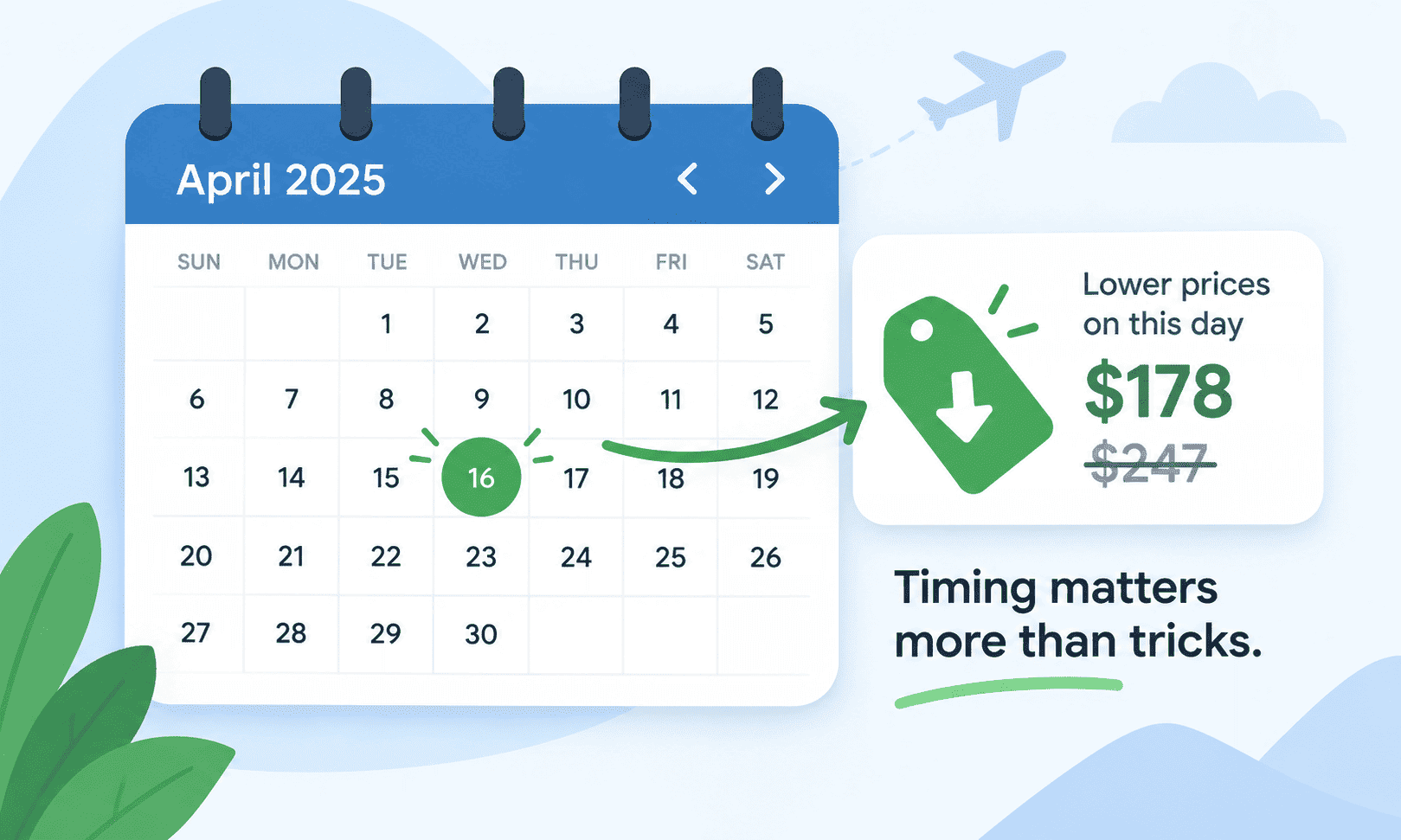
Quick answer: There’s no single “best day” to book that holds up year after year. Going’s data found Tuesday, Wednesday, and Saturday departures tend to run cheaper, while Expedia’s 2026 research found Friday departures and Friday bookings both came out ahead. Both can be true in different years or different route sets. What consistently matters more is your booking window (roughly 1 to 3 months out for domestic, 2 to 8 months out for international) and staying flexible on dates. Incognito mode and clearing cookies, despite the popular belief, don’t affect the price at all.
Why “Best Day to Book” Keeps Changing
Going’s flight data team has stated it plainly: the day you buy barely moves the needle, because prices update continuously throughout the day based on demand and remaining seats, not a weekly cycle. Meanwhile, Expedia’s 2026 Air Hacks report found Friday bookings ran about 3% cheaper than Sunday bookings, and Friday departures ran about 8% cheaper than Sunday departures, on the data set they analyzed that year.
Both studies are legitimate. They’re just measuring different years, different route mixes, and different customer bases. Treat “best day” tips as a mild tendency worth keeping in mind, not a rule to build your travel dates around.
What Actually Matters More: Your Booking Window
This is the part the data agrees on more consistently. How far ahead you book has a bigger, more reliable effect than which specific day you click “buy.”
| Flight Type | Recommended Booking Window |
|---|---|
| Domestic (regular season) | 1 to 3 months ahead |
| Domestic (peak season, holidays) | 3 to 5 months ahead |
| International (regular season) | 2 to 8 months ahead |
| International (peak season) | 4 to 10 months ahead |
Expedia’s 2026 data adds a useful data point on the shorter end: domestic economy fares booked 15 to 30 days out saved travelers roughly $130 on average compared to booking 180-plus days out, and international fares booked 8 to 15 days ahead saved about $225 compared to booking six months out, with a smaller but still solid $190 saved for those booking 31 to 45 days ahead. Waiting until the last minute rarely pays off. Prices typically climb in the final three weeks before departure, once airlines can see exactly how full a flight is getting.
Days That Tend to Run Cheaper to Fly
If you have flexibility, midweek travel (Tuesday and Wednesday specifically) and Saturday departures have shown up as cheaper across multiple studies, sometimes by around 14% compared to a Sunday departure on domestic routes. It’s not an ironclad rule. Good Sunday fares still show up. But when your dates are flexible, checking a midweek option first is a reasonable habit.
Myths That Don’t Actually Save You Money
Incognito mode or clearing cookies. This is the most persistent flight-shopping myth, and it’s simply not true. Browsing privately doesn’t change airline inventory, pricing algorithms, or how a booking site presents fares. Prices move on their own based on demand and remaining seats, and a coincidental price change right after you happened to look is what keeps this myth alive.
VPNs for big regional savings. There’s a real, small effect here (some airlines do vary pricing slightly by region), but tests using VPNs across different routes found savings in the range of $15 to $30, and not reliably. It’s not a strategy worth building a trip around.
Always waiting for a last-minute deal. Genuine last-minute discounts are rare outside of extreme circumstances. In most cases, prices rise, not drop, in the final weeks before departure.
Tools That Actually Work
Price tracking. Set up price alerts on Google Flights or a similar tracker for your specific route and dates, and let it notify you instead of manually re-checking. This is a genuinely useful habit, not a myth.
Flexible date search. If your travel window has any give in it, searching a range of dates (or using a site’s flexible-date calendar view) instead of one fixed pair of dates almost always surfaces cheaper options.
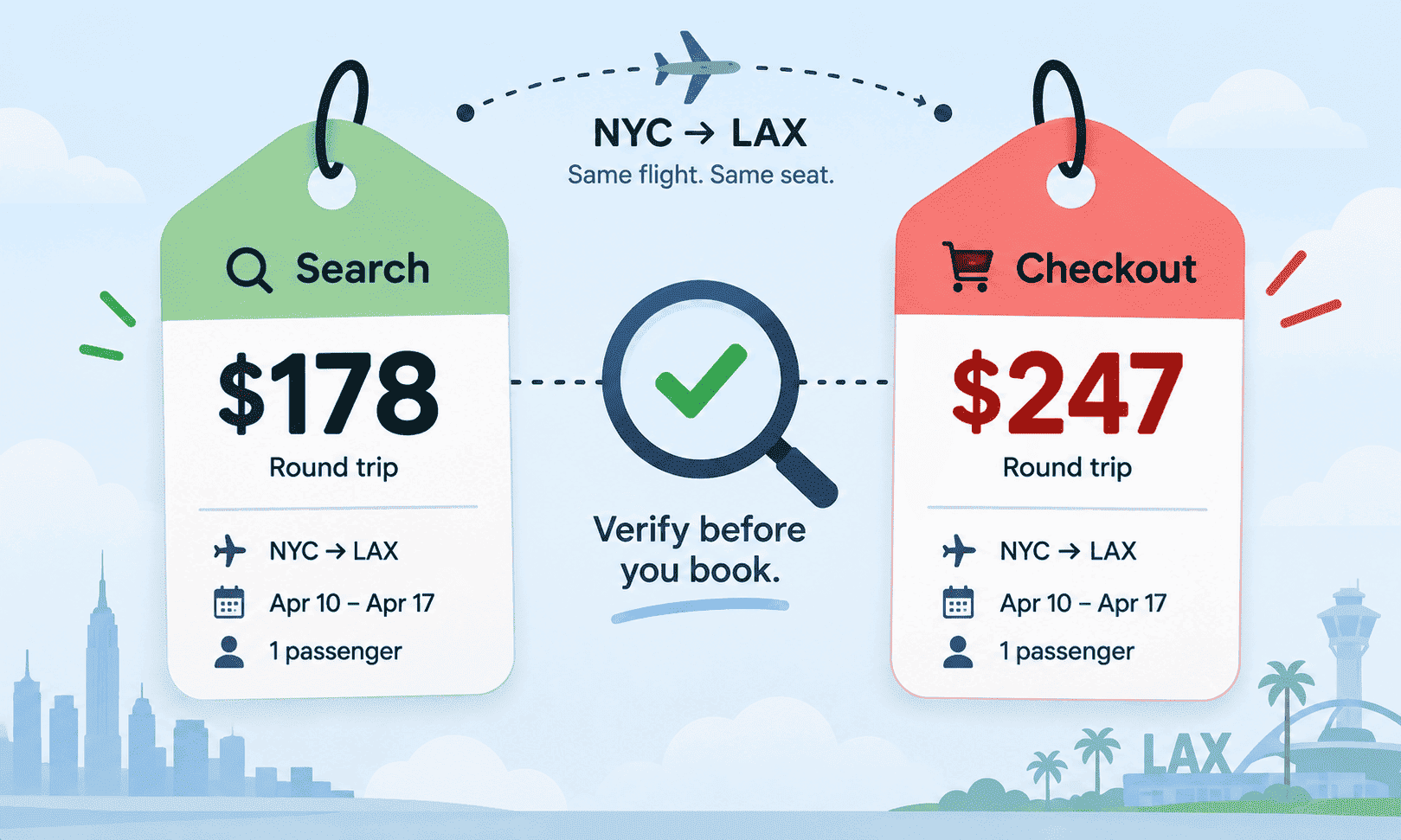
Checking the real fare when prices don’t match. If Google Flights shows one price and the airline’s site wants more when you click through, that’s usually a stale price or a booking-flow issue, not a bait and switch. [INTERNAL LINK: /ita-matrix-explained-real-flight-price “our ITA Matrix guide walks through how to check which price is actually real”] before assuming the worst.
Quick FAQ
Is there really a best day of the week to book flights? Not a reliable one. Recent large studies disagree on which specific day wins, which tells you the effect, if any, is small and inconsistent. Booking window and date flexibility matter more.
Does incognito mode lower flight prices? No. This has been tested repeatedly and doesn’t hold up. Prices change based on demand and inventory, not your browser history.
How far in advance should I book a domestic flight? Roughly 1 to 3 months ahead for typical travel, and 3 to 5 months ahead for peak season and holidays.
How far in advance should I book an international flight? Roughly 2 to 8 months ahead, and 4 to 10 months ahead for peak season.
Do VPNs actually get you a cheaper flight? Sometimes, by a small and unpredictable amount. It’s not a reliable savings strategy on its own.
Sources
- Going.com: When Is the Best Time to Book a Flight? (2026 Data)
- Expedia Newsroom: 2026 Air Hacks Report
- Kiwi.com: Stop Wasting Time, Incognito Mode Doesn’t Cut Airline Fares
- SmarterTravel: Do Airlines Raise Prices Based on Your Location?